Light Sources for Outdoor Lights
Retrofit: Modern Light in Classic Fixtures
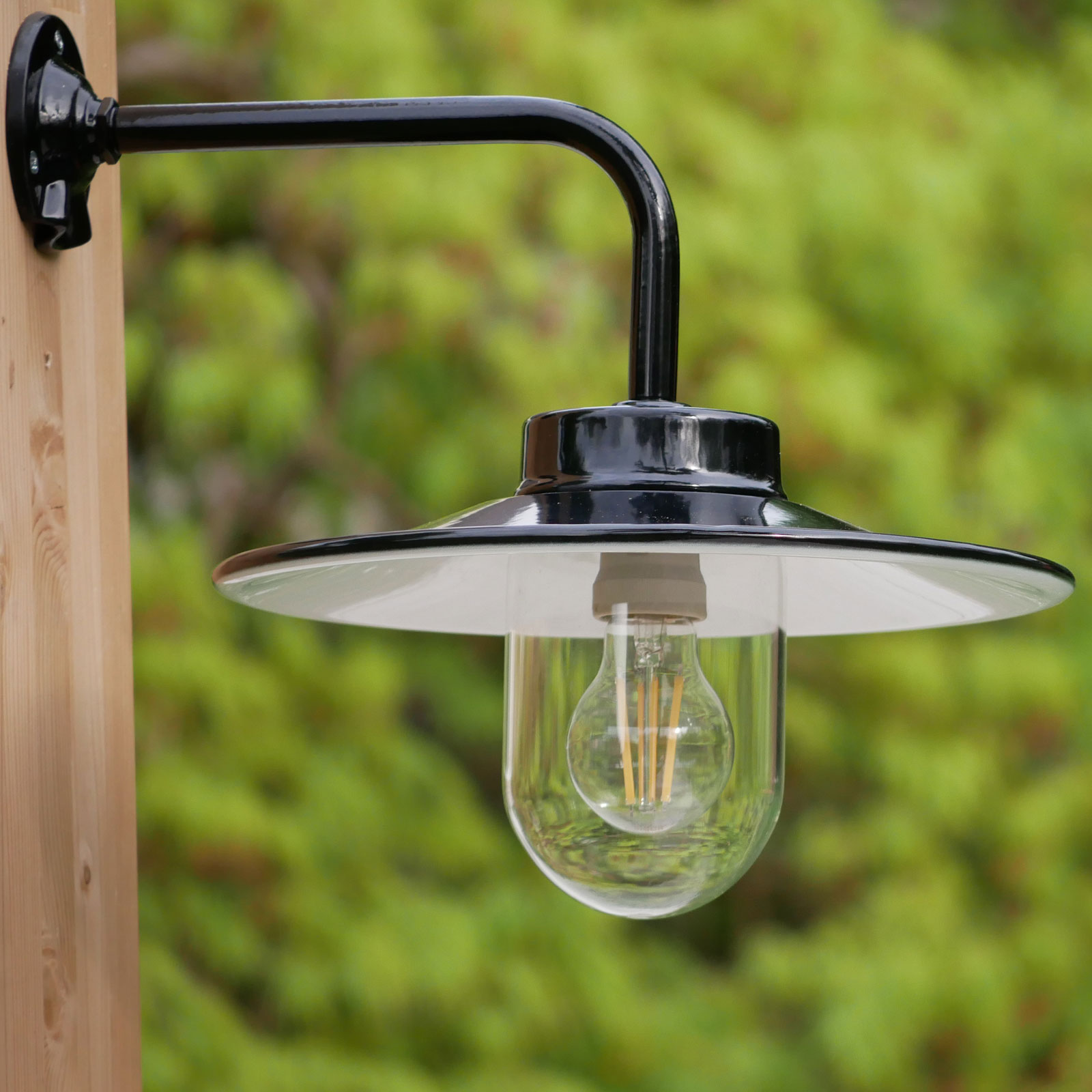
For a very long time, we fitted our fixtures with conventional incandescent bulbs, Edison bulbs, and halogen lamps. Those days are now firmly behind us, and fortunately, under the keyword "retrofit," LED bulbs are now available in every conceivable size and design, for every application.
Retrofit refers to integrating new technology into existing devices so they can keep being used. A typical example of retrofitting is replacing conventional incandescent bulbs with LED bulbs, while the existing fixture continues to be used without any further changes. What matters here is that the LED bulb has the same dimensions and connections as the original bulb. Even though the new bulb could technically be built smaller, this is often avoided in order to preserve the original light distribution — which is why LED bulbs often keep the same size as incandescent ones. It's also important to make sure the new LED bulb is electrically compatible, especially when dimmers are used, or ballasts in the case of fluorescent tubes — otherwise the LED light can flicker at the dimmer.
Energy Savings of Over 50 Percent
LED lamps have become indispensable and are now firmly established in the lighting landscape. With energy savings of over 50 percent compared to conventional energy-saving lamps, they've proven to be extremely efficient. The range of LED bulbs and lamps has grown enormously over the past five years and is expected to displace and replace all other types of bulbs — conventional incandescent bulbs, halogen lamps, compact fluorescent lamps, and fluorescent tubes — in the near future. The bulb market already offers a wide range of LED models with different bases, for different applications, available to buy online.
Light Color and Luminous Efficacy
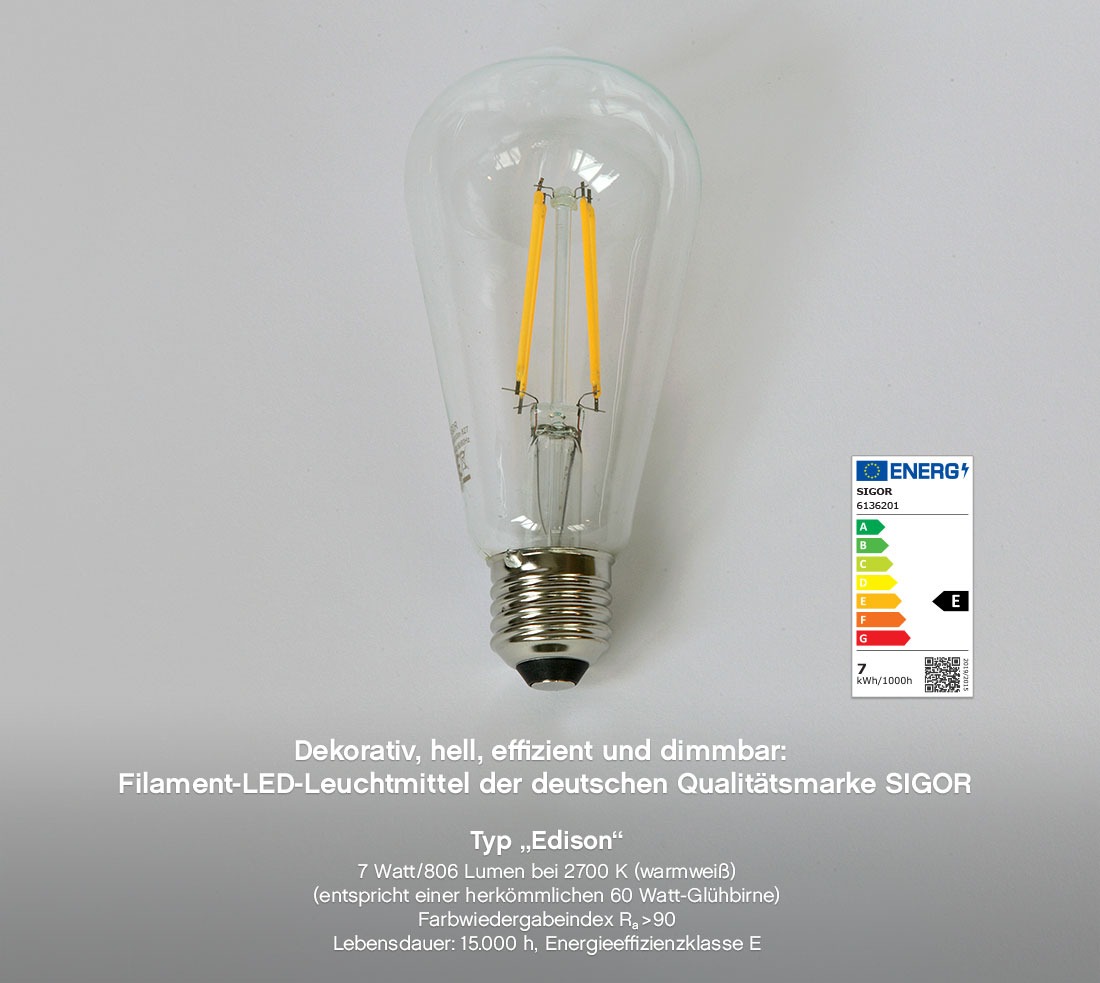
When switching to LED lamps, pay particular attention to the light color, or color temperature. Warm white light (2700–3000 Kelvin) is recommended when you want to create a cozy atmosphere, while neutral white or daylight white light (4000–6500 Kelvin) is preferred in work areas, to help boost concentration.
It's important to choose the right LED bulb as a replacement. Luminous flux (lumens) should be used for comparison, since the lumen figure is often not stated on the bulb being replaced. A rough estimate can be made based on the wattage.
When buying LED lamps, also check whether they're dimmable and whether they're compatible with your existing dimmers.
It's normal for people to feel a bit uneasy when new LED lighting is installed, especially if its light color or color temperature differs from the previous lighting. This is because LED lamps can emit a range of light colors, and a sudden change in light color can feel unpleasant. Light from LED lamps with a color temperature of 4000K or even 6500K, for instance, can feel quite harsh — particularly if warmer, lower-color-temperature light was used before.
For a Pleasant Atmosphere
To create a pleasant lighting environment, we recommend using warm white light with a color temperature in the range of 2700 to 3000 Kelvin. This light creates a cozy atmosphere and works well in spaces such as living rooms, bedrooms, restaurants, and bathrooms. In work areas where you want to support concentration, on the other hand, neutral white or daylight white light with a higher color temperature between 4000 and 6500 Kelvin can be used.
It's important for the light color to be consistent throughout a room to avoid mixed lighting, since people can be sensitive to different light colors appearing together. If possible, all the bulbs in a room should be replaced at the same time, to ensure consistent lighting.
When buying LED lamps, it's also important to check compatibility with your existing dimmers if a dimming function is wanted. Not all LED lamps are dimmable, and even dimmable LED lamps may not be compatible with certain types of dimmers.
Overall, LED lamps offer many advantages, including energy efficiency, a long lifespan, and a range of light color options. By carefully choosing the right light color and taking dimmer compatibility into account, you can create a genuinely pleasant lighting experience.
The Advantages of LED Lamps Are Wide-Ranging
- They have a very long service life of up to 60,000 hours and can withstand up to 100,000 switching cycles.
- They offer high energy efficiency and a good lumens-per-watt ratio.
- Fewer harmful substances are used than in classic energy-saving lamps.
- A range of light colors is available.
- Full brightness is reached instantly when switched on.
- They generate very little heat.
- They're highly resistant, including to vibration and impact.
- They emit no UV radiation.
- LED lamps are available in a variety of shapes.
That said, LED lamps do have a few drawbacks:
- They're often more expensive than conventional lighting.
- Color rendering can sometimes be worse than with halogen or incandescent bulbs.
A Selection of Outdoor Lights


by Schlesische Laternen
Special sale, only €164.00 Previous price €230.00 → you save 29%