Outdoor Light Care Tips
How Good Outdoor Lights Last for Decades
What's the best way to care for brass, zinc, or copper surfaces? How do you keep ceramic or glass clean? What can be done about corrosion on iron — and does aluminum rust? How long do cables and sockets last? Anyone who has chosen a quality piece from our site has invested a fair amount, and rightly expects it to withstand wind, weather, and other environmental factors for decades.
Caring for Brass, Zinc, and Copper Outdoor Lights
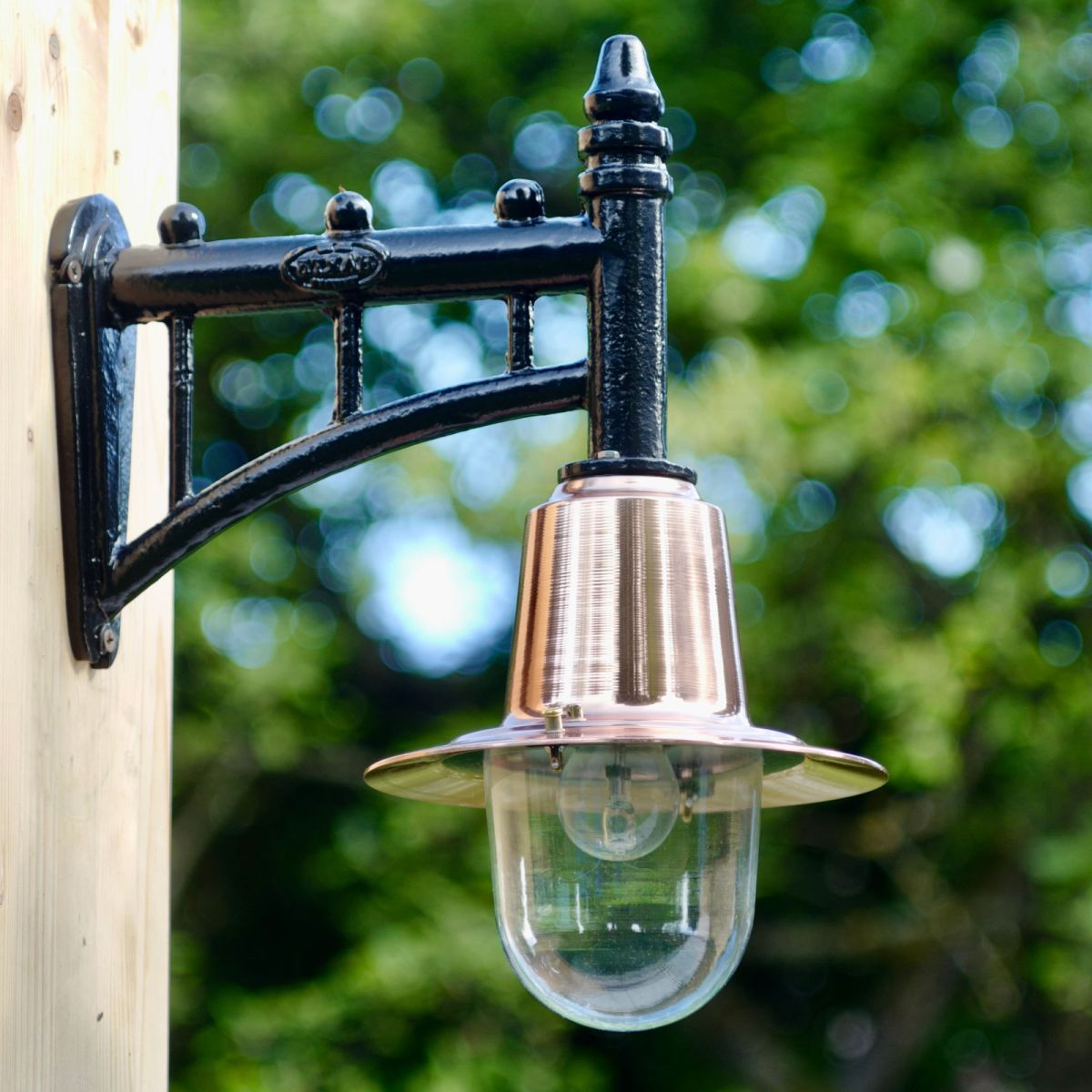
With brass surfaces, a general distinction is made between polished (gold-colored) brass and patinated (brownish) aged or antique brass. Polished brass, when left unlacquered, darkens over the years — meaning it develops a natural patina that protects the brass from further corrosion for centuries. The polished brass surfaces from our manufacturers are usually lacquered, and may be cleaned with a mild cleaning agent or water and a soft cloth.
Brass Darkens Again Quickly
Naturally or chemically patinated brass surfaces are somewhat more delicate: they can be cleaned well with water, a soft cloth, and gentle pressure. Take care not to damage the patina in the process, since it's generally sensitive to scratching. If it does happen, there's no need to worry: brass, especially outdoors, quickly darkens again at any lightened spot. Copper and zinc behave much the same way as brass.
Ceramic and Glass on Outdoor Lights: Easy to Clean
Ceramic and glass are very easy to clean with glass cleaner. If the glass can be removed, as with the glass shades on barn lights, don't hesitate to put it in the dishwasher. Caution is needed, however, with engobed ceramic and terracotta, as offered by some Italian manufacturers such as Aldo Bernardi or Ferroluce: engobed ceramic should only be cleaned with a soft, dry cloth, as should terracotta, which is particularly prone to unwanted staining from greasy or oily solutions. Acrylic or polycarbonate plastic glazing is cleaned the same way as glass.
Iron, Aluminum, and Painted Surfaces on Outdoor Lighting
Iron needs to be protected from rain and air pollution, otherwise corrosion inevitably sets in. That's why outdoor light manufacturers such as Robers Leuchten coat their galvanized wrought-iron products with a durable, scratch-resistant lacquer layer that protects the iron for decades. Special care should be taken during installation not to damage this surface. If it does get damaged, the spot needs to be resealed with lacquer. If rust has already taken hold, it should be rubbed off with steel wool, the spot treated with a rust converter (available at any hardware store), and, once that has dried, repainted.
Aluminum Outdoor Lights: Resistant to Dirt
Raw aluminum is not a common finish for light fixtures — aluminum is almost always lacquered. These lacquered surfaces, whether on iron or aluminum, can be cleaned very easily with a gentle household cleaner. For very stubborn dirt that has "built up" over decades, a mild abrasive cleaner, rubbed in with only light pressure, does the trick.
With high-gloss finishes especially, take care not to scratch the surface. If the finish does wear through, there's no need to worry with aluminum: like brass, it forms an oxide layer that protects it from further corrosion. What's more, all the aluminum products from our manufacturers are anodized or chromate-coated, which makes them just as resistant as stainless steel.
Stainless Steel, Chrome, and Nickel on Outdoor Lights
Stainless steel, chrome, and nickel don't rust, but they aren't dirt-repellent either. High-gloss surfaces in particular need careful cleaning to avoid unsightly scratches. A soft cloth and a gentle household cleaner will do the job.
Cables and Wiring in Outdoor Lamps
The cables and wiring in our manufacturers' products hold up for many decades, as long as the specified wattage is respected. It's stated on every one of our listings. Over the past several years, we've restored a number of fixtures whose wiring, evidently thanks to being properly looked after, was still in perfect condition even after a hundred years, and would have passed any electrician's inspection. Some manufacturers, such as Terraluce, use very thin cables: these are special, extremely durable, heat-resistant Teflon cables. So the thickness of a cable says nothing about how long it will last.
Sockets on Outdoor Lights
Most of our products come with acid- and temperature-resistant, glazed ceramic sockets, which last for several generations even outdoors. Brass or brass-plated sockets are also extremely durable. High-quality plastic sockets, made from Bakelite, for example, are also commonly used. They too last a very long time, as long as the specified wattage is respected — because, like the plastic insulation on cables, they can't tolerate excessive heat over the long run: the plasticizer in the material gradually evaporates, and it becomes brittle.
Energy-Saving Bulbs Can Help
If you really need more output than the manufacturer specifies, energy-saving bulbs can help. These generate only a fraction of the heat of standard bulbs, so a fixture rated for a maximum of 60 watts can easily be run with a 20-watt energy-saving bulb (equivalent to a 100-watt standard bulb).
In Closing
Generally speaking: outdoor lights are a bit like houseplants — too much care tends to do more harm than good, but a little attention now and then certainly doesn't hurt. Our manufacturers draw on decades of experience and use forms and finishes that have often proven themselves over centuries, and are made precisely for the purpose you're using them for. A historic lantern on an old building doesn't have to — in fact, shouldn't — be polished to a high shine. Some of our manufacturers go to considerable lengths to make their products look "old," so a little dirt certainly won't take anything away from their beauty.