

Outdoor Lighting and Indoor Lighting
Differences between outdoor lights and indoor lights
Outdoor lights and indoor lights have different requirements and characteristics that make them suitable for their respective areas of use. While indoor lighting primarily serves decorative and functional purposes inside a building, outdoor lighting must be specifically designed to withstand the challenges of exterior environments. The key differences are outlined below:
Weather resistance of outdoor lights
The main difference between outdoor and indoor lighting is weather resistance.
- Outdoor lights are designed to withstand extreme weather conditions such as rain, snow, wind, temperature fluctuations, and UV exposure. They must be robust and resistant to rust, corrosion, and moisture. Outdoor luminaires are often made from materials such as brass, copper, stainless steel, aluminium, zinc, or cast iron, which are specifically suited for exterior use.
- Indoor lights are not designed for outdoor use, as they do not offer the same level of weather protection. They are intended for use in protected environments such as living rooms, offices, or kitchens, where they are not directly exposed to moisture or harsh weather conditions.
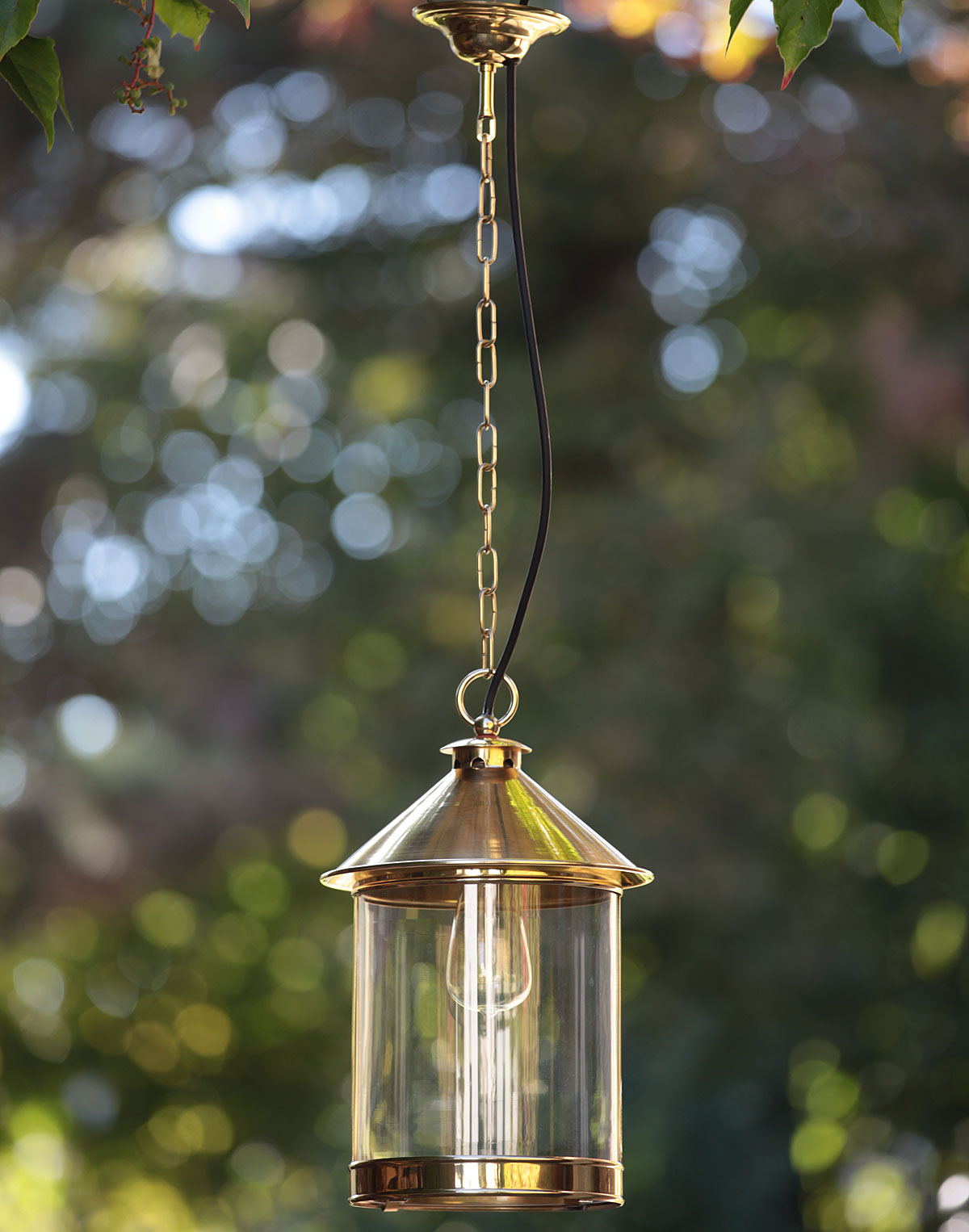
Of course, there are also luminaires that can be used both indoors and outdoors, as shown in the photo on the right.
Our Most Popular Outdoor Lights
12 items sorted by


