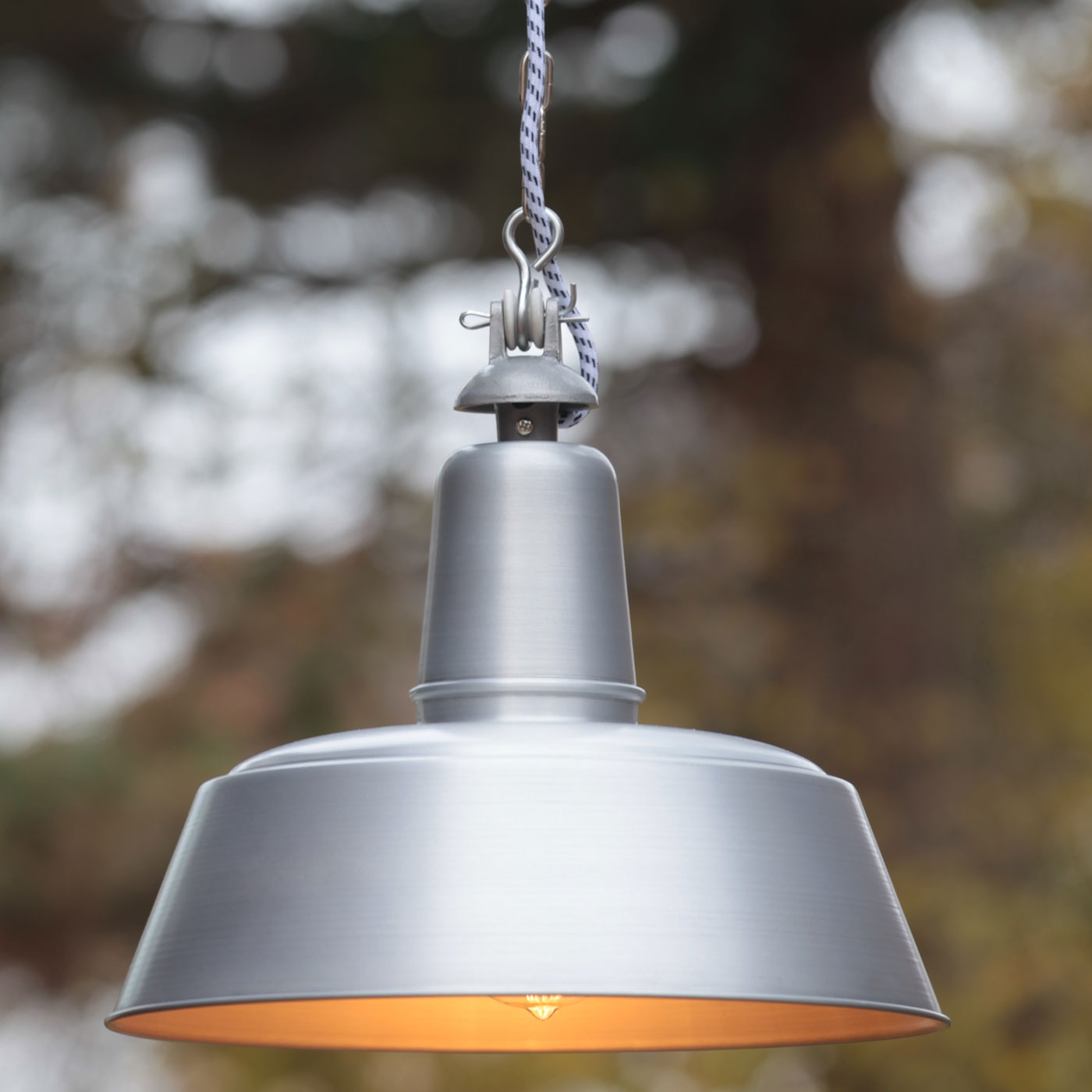
How Many Lumens Does an Outdoor Light Need?
Plenty of Light, Barely a Shadow: Getting Outdoor Brightness Right
The brightness of an outdoor light isn't measured in watts, but in lumens — watts only describe power consumption, while lumens indicate the actual light output. How many lumens a fixture should deliver depends on where it's used: a path light needs far less brightness than a façade spotlight, and a too-bright entrance can cause glare faster than it seems.
Lumens, Lux, and Watts: What's the Difference?
Lumens (lm) indicate the total amount of light emitted by a light source (= light bulb). Lux (lx), on the other hand, describes how much of that light actually reaches a given surface — depending on the distance and orientation of the fixture. Watts (W) only indicate power consumption, and with modern LED bulbs, they're no longer a reliable measure of brightness.
Rule of Thumb: 400 to 1,000 Lumens per Fixture
For most outdoor areas — pathways, garden spaces, or accent lighting around the house — around 400 to 1,000 lumens per fixture or bulb is a safe bet. This range provides pleasant illumination without causing glare. Depending on the fixture's exact purpose, though, it's worth taking a closer look at the specific area of use.
Lumen Recommendations by Area of Use
- Entrance area and front door: about 200 to 400 lumens. That's enough to welcome guests and guide the key into the lock safely, without overpowering the façade.
- Paths and garden walkways: about 100 to 300 lumens per fixture, mounted low and angled downward. The goal is orientation, not floodlighting — several softer lights usually work better than a few bright ones.
- Terrace and seating area: about 300 to 600 lumens for general lighting, up to 1,000 lumens in dining or grilling areas.
- Façade and accent lighting: about 800 to 1,200 lumens to effectively showcase masonry, trees, or architectural details.
- Driveway and garage: about 500 to 1,000 lumens, depending on the area and whether additional task lighting is needed.
- Security lighting with motion sensors: this can be considerably brighter — from 700 up to several thousand lumens, depending on the area to be covered.
Avoiding Glare: Less Is Often More
Especially outdoors, a fixture that's too bright causes glare and casts harsh shadows instead of providing safety. Several fixtures with a moderate lumen output, cleverly placed, usually create a more pleasant and functional result than a single very bright source. Warm white light (2700–3000 Kelvin) also feels cozier than cool white and blends more naturally into the architecture.